
Introduction
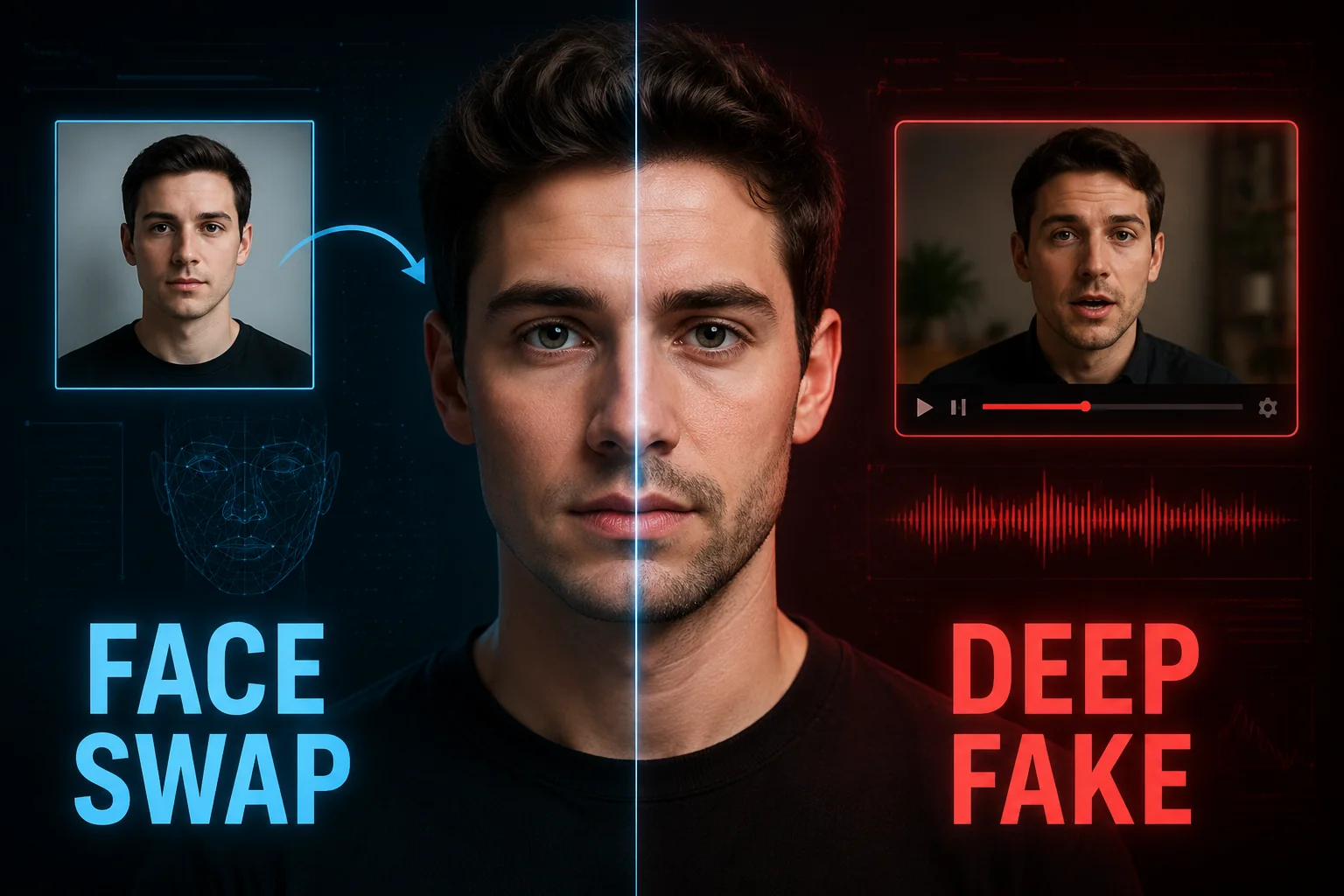
Most people use "face swap" and "deepfake" interchangeably until one gets them in trouble. The face swap vs deepfake distinction isn't really about the software—it's about intent and whether someone's identity is being misused. One is a clearly playful edit; the other fabricates a person saying or doing things they never did.
This guide is hands-on. You'll learn to tell the two apart on sight, so you can verify any clip you receive before sharing it.
We'll inspect blend edges, watch motion tells like blink rate and head-turn warping, run an audio-lip sync check, and trace the source for context. Then you'll see how to make a harmless, disclosed swap yourself with a tool like AI Video Face Swap Online. A printable six-point checklist closes it out, so you can screen suspicious footage in under a minute.
Key Takeaways
The core of face swap vs deepfake comes down to intent and identity, not the software. A face swap maps one face onto another in an obviously playful or consensual clip. A deepfake fabricates someone saying or doing things they never did.
You can usually tell them apart on sight. Zoom on the jawline, hairline, and ears for soft seams, then watch blink rate, teeth, and lighting for mismatches. Check whether the audio and lips actually sync.
To stay on the harmless side, only swap faces in videos you own or have permission for, keep the context clearly fictional, and disclose the edit. Tools like the still-photo face swap tool and the photo animation tool make that easy.
Main Concept Explained
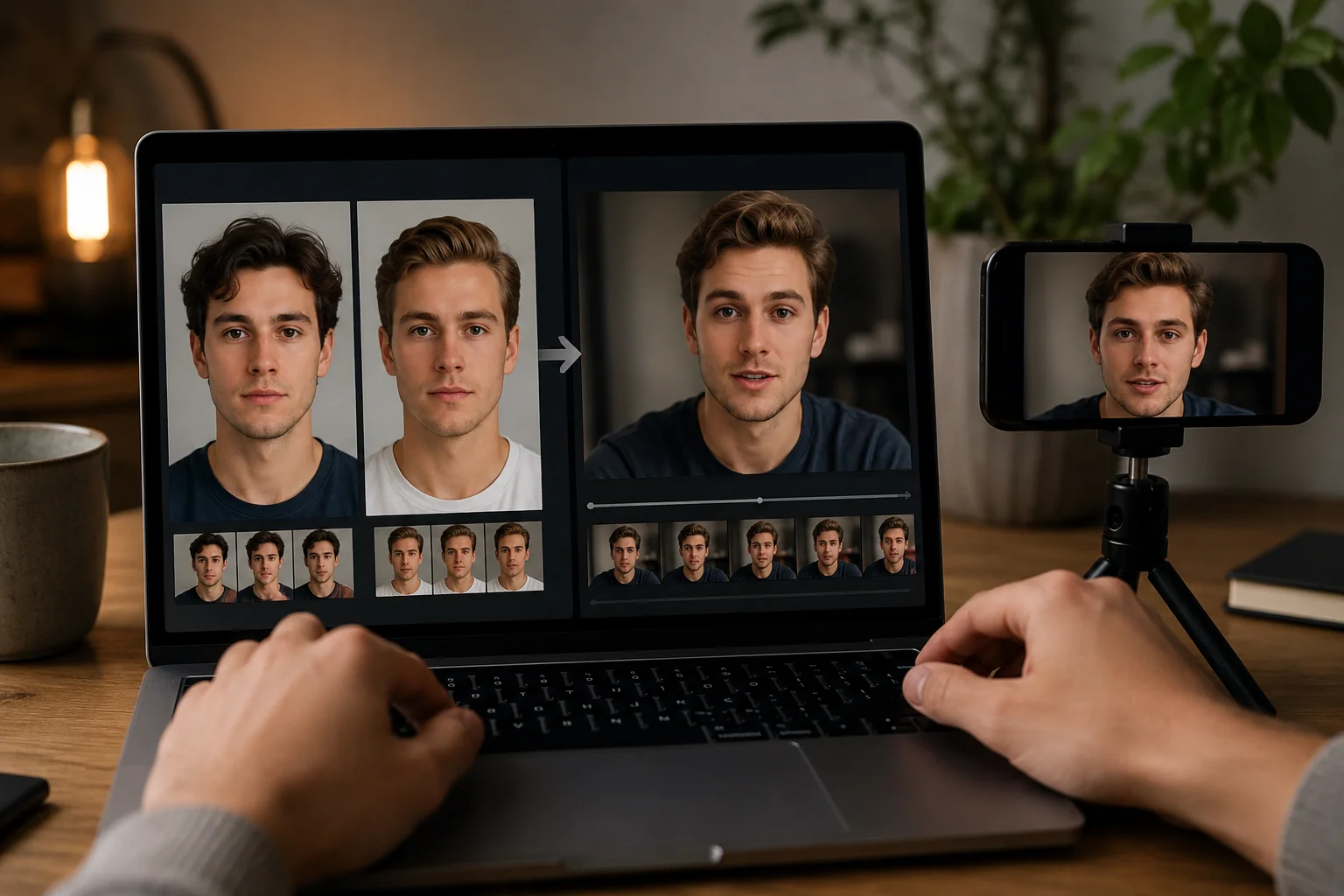
The fastest way to settle the face swap vs deepfake debate is to look at two things: what the tool changed, and why. A face swap maps one person's face onto another body or scene, usually for fun, parody, or a clearly fictional clip. The original voice and most of the footage stay intact.
A deepfake goes further. It synthesizes a person saying or doing something they never did, often pairing fabricated speech with matching mouth movement. The line isn't the software—it's the intent and whether someone's identity is being misused.
Think of it as a spectrum of edits. On the harmless end, you grin while wearing a friend's face in a meme everyone laughs at. On the harmful end, a public figure appears to confess to a crime in a video built to deceive. Same underlying technology, very different consequences.
That distinction matters for two practical reasons. First, when you receive a clip, knowing which category it falls into tells you how much to trust it. Second, when you make a clip, staying clearly in the playful, consensual swap lane keeps you out of legal and ethical trouble.
Most consumer tools sit firmly on the swap side. If you want to try one and see the boundary for yourself, a simple still-image tool like still-photo face swap tool shows how a face gets mapped onto a target without rewriting what the person says or does. The face stays; the meaning doesn't change.
If you want the full picture of how swapping works under the hood—tracking, blending, and output quality—our AI face swap guide walks through the mechanics step by step. With those basics in hand, the next sections give you a hands-on routine for spotting which side of the line any clip actually lands on.
How to Apply It
Knowing the theory behind face swap vs deepfake is useless until you put a real clip in front of you. Open the video on the largest screen you have and pause it on a frame where the person turns their head. That single moment exposes more than any amount of normal-speed playback.
Start at the edges. Zoom into the jawline, hairline, and the soft tissue around the ears. A quick face swap usually leaves a faint seam or a color mismatch where the new face meets the original skin. A deepfake re-renders the whole head, so the giveaway shifts to unnatural smoothness and texture that looks slightly too clean.
Next, watch the motion. Count blinks over thirty seconds, then check the teeth and tongue when the mouth opens wide. Swaps often keep the original mouth intact, while synthesized faces tend to mush fine detail during fast movement. Lighting that ignores the room’s actual light source is another reliable tell.
Then test the audio. Mute the clip, read the lips, and unmute it. If the words and mouth drift apart frame by frame, you are likely looking at fabricated speech layered onto a face—closer to a deepfake than a playful swap, which normally preserves the source audio untouched.
Finally, trace the source. Reverse-search a screenshot, look for a watermark or an “AI-generated” label, and ask whether this person would plausibly say this in this setting. Context catches what pixels hide.
If you want to create your own harmless version instead of just spotting others, keep it consensual and obviously fictional. Use a video you own or have permission to edit, run it through a dedicated tool like AI Video Face Swap Online, and label the result clearly as edited. That single disclosure keeps your content on the right side of the line.
For the bigger picture on technique and quality, the AI face swap guide walks through the full workflow. And before you post anything involving someone else’s face, read Is Face Swap Legal? Privacy & Consent in 2026 so you understand where permission stops being optional.
AI Video Face Swap Online
Upload a face photo and MP4 or MOV video to replace faces online with frame-by-frame tracking, adaptive blending, and 720p MP4 output.
Free to start • No credit card required • Professional quality

Common Pitfalls
The biggest mistake people make in the face swap vs deepfake debate is treating one visual tell as proof. A soft jawline or a missed blink can come from low bitrate or compression, not deception. Weigh several signals together before you decide.
Another trap is assuming a missing watermark means the clip is real. Labels get stripped during re-uploads and screen recordings, so absence of a tag proves nothing on its own. Trace the source instead of trusting the file you were handed.
People also forget that legality follows consent, not technique. A playful swap of a friend who agreed is fine; the same edit of a stranger can cross a line fast. If you are unsure where you stand, read Is Face Swap Legal? Privacy & Consent in 2026 before publishing.
Finally, when you make your own clips with a tool like face swap vs deepfake, keep the context obviously fictional and disclose the edit. That single habit keeps your work clearly on the harmless side.
Real-World Examples
Think about the viral clips you have already scrolled past. A creator drops their face onto a movie hero for a comedy reel, captions it as a joke, and keeps the original soundtrack. That is a harmless swap—context is playful, consent is implied, and nobody is misled.
Now picture a politician appearing to confess to a crime in a clip with no source, no watermark, and mouth movements stitched to fabricated speech. That is the deepfake end of the face swap vs deepfake spectrum: synthesized words, identity misuse, real-world consequences.
The everyday cases sit between these poles. A coworker forwards a celebrity "endorsement" video—run your edge, motion, and lip-sync checks before sharing. A friend posts a birthday parody using your photo with your blessing—clearly fiction, clearly fine.
If you plan to make your own, stay on the safe side with a tool like AI Video Face Swap Online on footage you own, and disclose the edit. Curious where the legal line falls? See Is Face Swap Legal? Privacy & Consent in 2026 before you publish.
Conclusion
The face swap vs deepfake distinction comes down to two things: intent and identity misuse, not the software behind the clip. A face swap maps one face onto another in a context that reads as playful or fictional. A deepfake fabricates a person saying or doing something they never did.
Once you've inspected the edges, watched the motion tells, and checked lip sync against the audio, you can usually place a clip on the correct side of that line in under a minute. Run the six-point checklist on anything that feels off before you reshare it.
When you make your own content, work from footage you own or have permission to use, keep the framing obviously fictional, and disclose the edit. iMideo's AI Video Face Swap is built for exactly this: upload a photo and an MP4 or MOV, and you get a 720p result with frame-by-frame tracking. Before publishing, read Is Face Swap Legal? Privacy & Consent in 2026 so your face swap vs deepfake judgment holds up legally too.
FAQ
How does face swap technology differ from deepfake?
A face swap maps one face onto another within an obviously playful or consensual clip, usually keeping the original audio. A deepfake synthesizes a whole performance, fabricating speech and actions the person never did. The line is intent and identity misuse, not the tool.
Are face swap apps using deepfake technology under the hood?
Often the underlying neural networks overlap, since both rely on face detection and generative blending. The difference shows in how output is used. A consumer face-swap app produces light, disclosed edits, while deepfake pipelines aim for undetectable, deceptive impersonation of real people.
Why is "deepfake" usually used as a negative term?
The word entered public use through fabricated, non-consensual videos meant to deceive viewers. Because early high-profile cases involved fraud and harassment, "deepfake" carries an assumption of bad intent. Face swap stayed associated with harmless, clearly fictional entertainment instead.
Can a face swap video be detected as a deepfake?
Detection tools flag synthetic facial regions, so a heavy face swap can trip the same alarms. Light, disclosed swaps with original audio and visible seams are usually read as edits, not deception. Context and labeling matter as much as the pixels.
Is face swap safer for casual creators than deepfake?
Yes, when you swap faces on footage you own or have permission for, keep the result obviously fictional, and disclose it. That stays within harmless territory. For the legal boundaries, see Is Face Swap Legal? Privacy & Consent in 2026.