
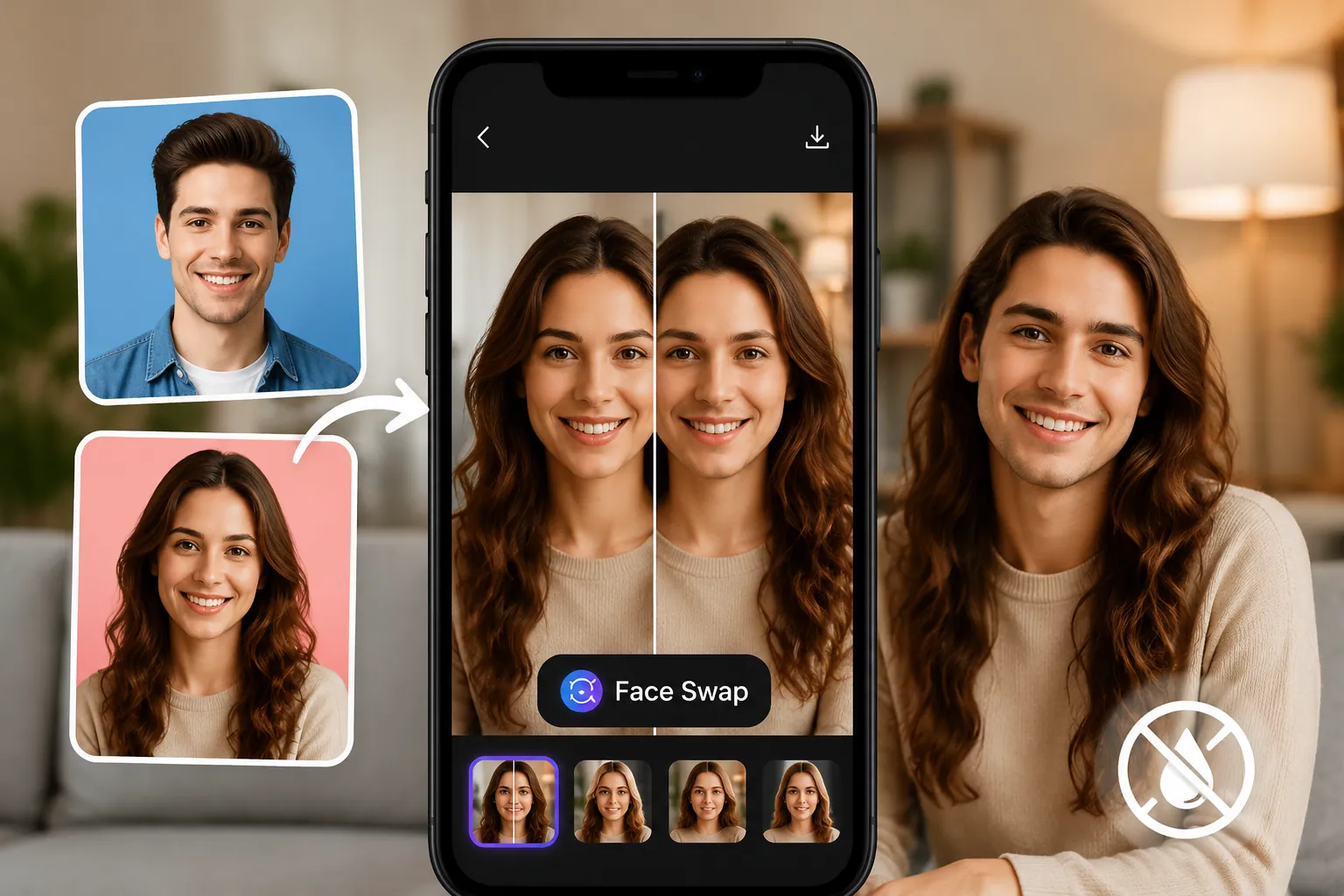
Introduction
Searching for a face swap app no watermark usually means one thing: you finished a swap, went to export, and a stamp appeared in the corner anyway. This guide skips the endless app lists and shows you a repeatable export workflow that produces a clean result on the first try.
You'll learn why watermarks show up at all, which output settings quietly trigger a downgrade, and the exact verification step most people skip before posting. We use AI Video Face Swap Online as the worked example for video clips, then cover how to fix a file you already exported with a stamp.
By the end, you'll know how to choose the right resolution and format, scrub frames to catch faint or animated marks, and avoid the mobile share-sheet traps that silently re-add branding. No guesswork, just a checklist you can reuse.
Key Takeaways
Watermarks usually appear for one of two reasons: a free tier stamps its branding, or an export setting quietly downgrades your clip. Knowing which one you're hitting tells you exactly how to fix it.
The reliable path is to pick the right resolution and format before exporting, then verify by scrubbing through frames and checking the corners and edges. Faint or animated stamps hide there.
For a clean still-photo face swap tool result on stills, or a polished clip with the photo animation tool, the same discipline applies. Choosing a true face swap app no watermark and confirming the export is what saves you from re-rendering after you've already posted.

Main Concept Explained
A watermark is not random. It is a deliberate signal that you used a free tier, hit an export limit, or skipped a setting that unlocks a clean file. Understanding which of these triggered your stamp is the fastest route to removing it.
Most tools fall into three buckets. Some brand every free export by design. Others let you produce clean output once you pick a paid "clean export" option or the right resolution. A few add a faint, sometimes animated stamp in a corner that you only notice after publishing.
The goal of a true face swap app no watermark workflow is to land in the second bucket on purpose: choose the format, resolution, and tier that the tool treats as a clean export, then verify before you post. That sequence matters more than the specific app you pick.
Concretely, that means knowing your target before you upload. If you want a 720p MP4 clip, set that as the export target from the start so the tool does not silently downgrade you into a watermarked preview. Picking a resolution the free tier blocks is the most common reason a stamp reappears at the final step.
The same logic applies whether you are working with stills or video. For single photos, a tool like still-photo face swap tool handles the swap and export in one pass, so you mainly need to confirm the output tier. Video adds frame tracking and blending, which is where corner stamps tend to hide across moving frames.
If you want the broader context on how these tools work under the hood, the AI face swap guide covers the models and trade-offs in depth. For this article, keep one idea front of mind: a clean export is a setting you choose and verify, not luck. The rest of this tutorial walks that exact path step by step.
How to Apply It
Here is the repeatable workflow that gets you a clean export on the first try. The order matters, because most watermarks sneak in during settings choices made before you ever hit render.
Start with your source files. For a video clip, you need a clear face photo and an MP4 or MOV. Upload both to AI Video Face Swap Online, which tracks the face frame by frame and blends it across the clip rather than stamping a single static overlay.
Before processing, set your output resolution to 720p MP4 directly. Picking a smaller preview size and upscaling later is the most common trigger for a downgrade-to-watermark on free tiers, so lock the target format up front.
Confirm you are on a tier that includes clean export. Many tools advertise themselves as a face swap app no watermark, then reattach branding the moment you choose the free preview path. Check the export panel for a "clean" or "HD" label before you commit.
Run the swap, then download the finished file rather than screen-recording the preview. Screen capture re-adds interface elements and corner stamps that the real export would not contain.
Now verify. Open the downloaded clip at full size, scrub through the timeline, and zoom into all four corners and the edges of the face. Faint or animated watermarks often appear only on specific frames, so a quick single-frame glance is not enough.
If everything reads clean across the clip, you are ready to publish. If you spot a stamp, do not crop reflexively. Re-render from the correct tier first, since cropping can cut into the swapped face and ruin the framing you just built.
For still images and phone-first edits, the principles carry over, but the export menus differ. If you mostly work from a handset, our walkthrough in The Best Face Swap App for iPhone in 2026 covers the share-sheet compression traps that silently re-add branding.
Want the broader context on tools, models, and quality tradeoffs behind each step? The AI face swap guide expands on why these settings behave the way they do.
AI Video Face Swap Online
Upload a face photo and MP4 or MOV video to replace faces online with frame-by-frame tracking, adaptive blending, and 720p MP4 output.
Free to start • No credit card required • Professional quality

Common Pitfalls
The most common mistake is screen-recording a preview instead of exporting the finished file. Previews almost always carry a temporary stamp, even on paid tiers, so the recording bakes a watermark into a clip that would have exported clean.
Sharing through a social app's built-in share sheet is another trap. The re-compression can strip your clean export and swap in a platform overlay, which people mistake for a watermark from their face swap app no watermark tool.
On iPhone, saving to Photos then re-uploading sometimes triggers a quality downgrade that re-adds branding. If you're working on a phone, check the export settings carefully and read The Best Face Swap App for iPhone in 2026 for device-specific steps.
Finally, don't trust a thumbnail. Watermarks often sit in the last few frames or fade in near the end, so scrub the full timeline before you publish.
Real-World Examples
Consider a creator making a birthday reel for Instagram. She swaps her friend's face onto a dancing clip, then scrubs the corners frame by frame before exporting. The clean 720p MP4 posts without a single stamp.
A small podcast team needed a quick promo using AI Video Face Swap Online. They uploaded a host photo and a short MOV, chose MP4 output, and verified the bottom edge at full zoom before publishing to YouTube.
One iPhone user kept re-adding a watermark by screen-recording the preview instead of using the real export button. Switching to a direct download fixed it instantly. If you mostly work on a phone, our guide to The Best Face Swap App for iPhone in 2026 covers these share-sheet traps in detail.
The pattern across all three cases is the same: pick a true clean-export tier, confirm resolution before rendering, then verify edges. Following that order makes a face swap app no watermark workflow reliable rather than a gamble on the first upload.
Conclusion
Getting a clean swap isn't about finding one magic tool. It comes down to picking the right export tier, matching your output resolution and format, and verifying the result before you post. That repeatable workflow is what separates a finished clip from one with a faint corner stamp.
For video clips, our worked example holds up well: a face swap app no watermark experience depends on choosing a clean-export path and scrubbing frame by frame to confirm the edges and corners are stamp-free. If you skip that verification step, mobile share sheets and screen recordings can quietly re-add branding.
If you're working mainly on a phone, the trade-offs shift a little. Our companion guide, The Best Face Swap App for iPhone in 2026, walks through the iOS-specific export traps in more detail.
Ready to try it? Upload a face photo and a short MP4 or MOV, run the swap, and check your corners before you share.
FAQ
Are any face swap apps truly watermark-free for free users?
A few are, but most free tiers stamp a corner mark or limit resolution. Browser tools like AI Video Face Swap Online let you export clean 720p MP4 clips without forcing a paid unlock for every download.
Do face swap apps remove watermarks after upgrade?
Usually yes. Paid tiers unlock a clean export path, removing the corner stamp on new renders. Older clips already exported with a watermark stay marked, so you must re-render them after upgrading rather than editing in place.
Will a face swap app watermark also appear in exported video audio?
No. Watermarks are visual overlays on video frames only. Some free tiers add an audio tag or ad jingle, but that is separate from the visible stamp and is far less common than corner branding.
How big is the difference in app size between watermark-heavy apps and clean ones?
App size rarely reflects watermark policy. A bloated app may bundle ads and trackers, while a lean one can still stamp exports. Judge by the export tier and test output directly, not by megabytes on the store listing.
Should I avoid apps that pretend to be watermark-free?
Yes. Some advertise clean exports, then add a faint or animated stamp at download. Always test one short clip and scrub the corners before trusting an app. For verified picks, see The Best Face Swap App for iPhone in 2026.