
Introduction
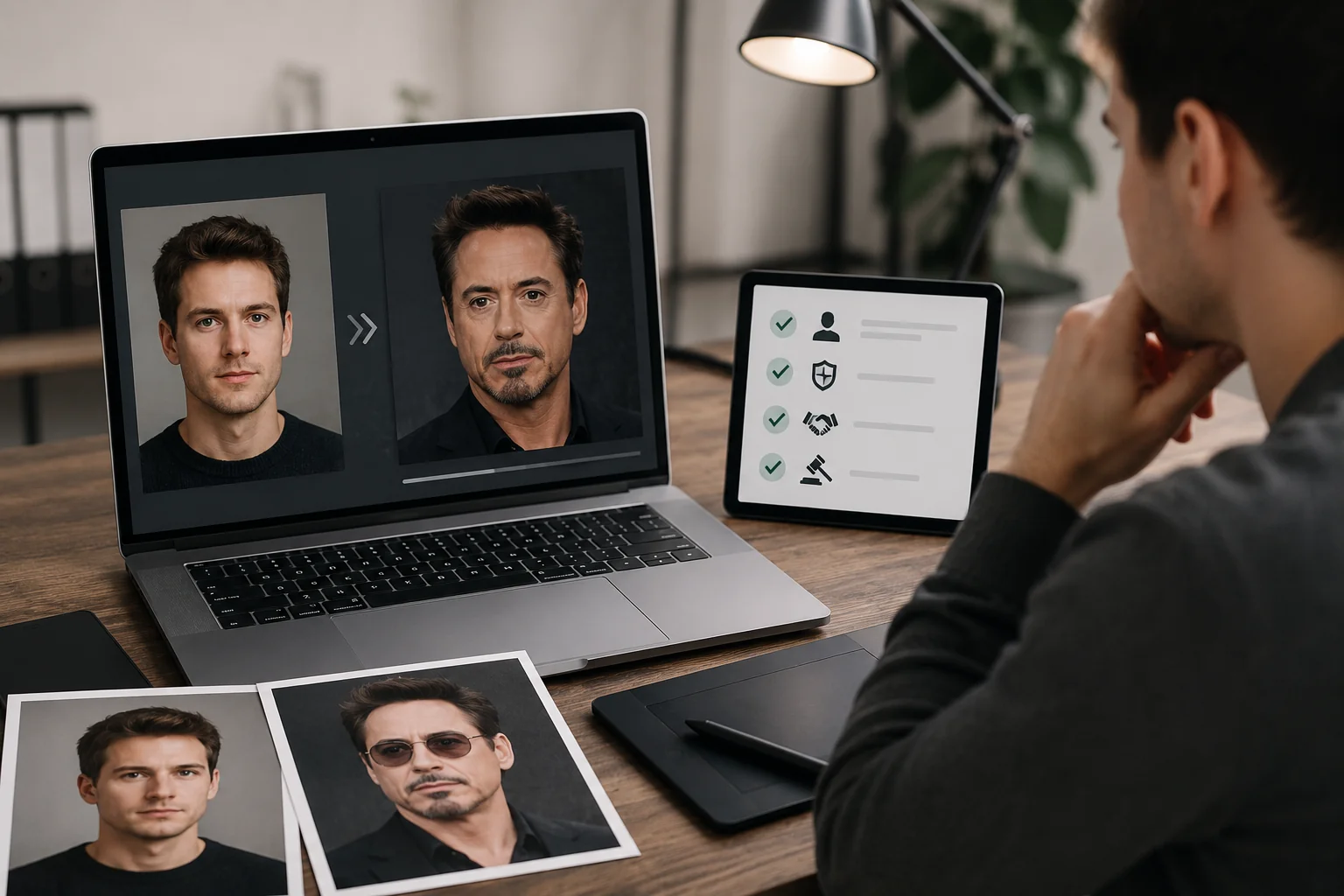
Whether a celebrity face swap legal question ends in a laugh or a lawsuit often depends on one thing: where you post it. The exact same edit can be protected parody in one country and an actionable violation of someone's image rights in the next.
This guide maps the three regimes that actually govern face swaps of famous people. In the US, it's a patchwork of state 'right of publicity' laws plus new deepfake statutes. In the EU, it's harmonized rules: image rights, GDPR, and the AI Act. In the UK, there's no standalone image right, so claims run through passing off, false endorsement, and data protection.
Below you'll find a side-by-side comparison of protected rights, deepfake-specific laws, commercial versus joke edits, labeling duties, penalties, and a practical 'safe-in-all-three' baseline for cross-border creators.
Key Takeaways
Whether a celebrity face swap is legal depends almost entirely on where you publish it. The same edit can be a harmless joke in one region and a lawsuit in another, so region matters more than the tool you use.
- United States: a state-by-state patchwork of right-of-publicity laws, now layered with new deepfake statutes like the ELVIS Act.
- European Union: harmonized rules stacking image rights over GDPR, the AI Act's transparency duties, and the DSA.
- United Kingdom: no standalone image right, but passing off, false endorsement, and the Data Protection Act 2018 fill the gap.
- Commercial use that implies endorsement is the fastest path to liability in all three regions; non-commercial parody gets more room, though labeling rules increasingly apply.
For the underlying mechanics before you weigh the law, our AI face swap guide covers how the edits are made.
Main Concept Explained
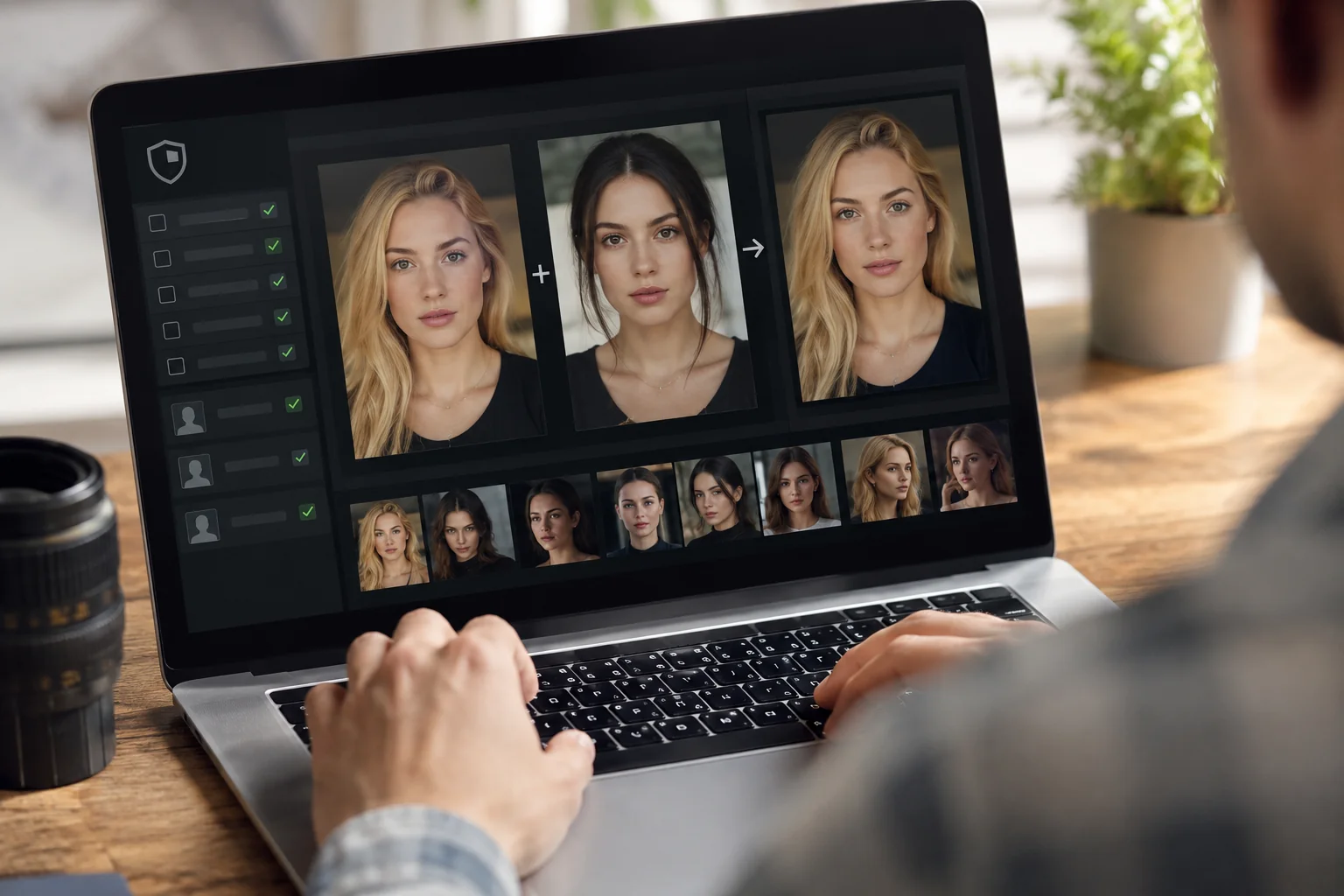
Whether a celebrity face swap legal question ends in 'fine' or 'lawsuit' rarely depends on the edit itself. It depends on where the viewer sits and why you made it. The same clip can be protected parody in one region and an unauthorized endorsement claim in another.
Three regimes govern most cross-border cases. The US relies on a patchwork of state 'right of publicity' laws plus newer deepfake statutes. The EU stacks harmonized rules: GDPR treats a face as biometric personal data, the AI Act adds transparency duties, and the DSA governs takedowns.
The UK sits apart. It recognizes no standalone image right, so claimants lean on passing off and false endorsement, backed by the Data Protection Act 2018 and ASA advertising rules. A celebrity there must show your swap implied a commercial link they never agreed to.
The dividing line every regime cares about is commercial versus non-commercial. A private joke edit shared with friends carries little risk. The moment a swapped face sells a product, promotes a brand, or drives ad revenue, it reads as endorsement — and that is where damages and injunctions appear.
Two practical factors sharpen the picture: consent and labeling. If your subject is a friend rather than a public figure, most of this risk disappears, which is why casual projects like Couple Face Swap Photo Ideas (50 Inspirations) stay clear of publicity law entirely. Tooling matters too; understanding what your app captures and stores, as covered in The Best Face Swap App for iPhone in 2026, helps you meet EU data-handling expectations.
Keep these three questions in mind as you read the regional breakdowns below: Who is the person, is the use commercial, and did you disclose that it was synthetic? Your answers, more than the region, decide where you land.
How to Apply It
Start by deciding what the edit is for, because that single choice moves you between regimes. A private joke shared with friends sits in a very different risk bracket than a clip attached to a product, a paid post, or a brand account.
Map your audience before you publish. If viewers span the US, EU, and UK, plan for the strictest rule that touches any of them rather than the loosest one that covers home. A US parody defense does not travel to an EU GDPR claim or a UK false-endorsement argument.
Run a quick three-question check on every celebrity clip. First, am I implying endorsement, sponsorship, or approval? Second, am I earning money, promoting a product, or driving traffic? Third, could a reasonable viewer mistake this for real footage? A single yes should slow you down.
Label clearly when the answer to that third question is yes. The EU AI Act and the UK Online Safety Act both push creators toward visible disclosure of synthetic media, and an on-screen note plus a caption saying 'AI edit' costs nothing and removes the deception argument entirely.
Keep commercial use out of the gray zone. Non-commercial satire, commentary, and clearly marked fan edits carry the lowest exposure across all three regions. The moment a face swap sells, endorses, or misleads, you have left the safe lane in every regime we compared.
For a genuinely safe project, build with people who have agreed to appear. Swapping your own faces or a friend's, as in these Couple Face Swap Photo Ideas (50 Inspirations), sidesteps publicity, personality, and passing-off claims because consent is baked in from the start.
When you do need a tool, keep the workflow and the labeling in one place. You can produce a clearly marked, consent-based edit with celebrity face swap legal practices in mind: upload your own footage, add a visible AI disclosure, and skip any framing that suggests a real endorsement.
Save your consent notes, source files, and disclosure text with each project. If a takedown request or a platform query ever arrives under the DSA or Online Safety Act, that short paper trail is the fastest way to show good faith and resolve it quietly.
AI Video Face Swap Online
Upload a face photo and MP4 or MOV video to replace faces online with frame-by-frame tracking, adaptive blending, and 720p MP4 output.
Free to start • No credit card required • Professional quality
Common Pitfalls
The most frequent mistake is assuming a parody label makes anything safe. Humor helps in US free-speech defenses, but it rarely shields a UK false-endorsement claim or an EU image-rights action if the edit implies the celebrity backed your product.
Creators also blur the commercial line without noticing. A private joke shared with friends is low risk, but the moment that same clip becomes a monetized thumbnail, ad, or sponsored post, the whole celebrity face swap legal analysis shifts toward unauthorized endorsement.
A third trap is ignoring disclosure duties. Under the EU AI Act and the UK Online Safety Act, unlabeled synthetic media invites takedowns and fines that the US patchwork may not trigger, so silence is riskier abroad.
Finally, people forget reach. A post legal in your state can still surface in Paris or London, exposing you to the strictest applicable regime. If you only want lighthearted, consenting edits, stick to safer formats like Couple Face Swap Photo Ideas (50 Inspirations).
Real-World Examples
The same edit can land very differently depending on where it is published. A parody clip swapping a US musician into a comedy scene may be shielded as non-commercial expression, yet the moment that clip fronts an ad, right-of-publicity claims and Tennessee's ELVIS Act come into play.
In the EU, a creator posting a swapped celebrity face without consent faces GDPR exposure because a recognizable likeness counts as personal data, and AI Act rules increasingly expect a clear synthetic-content label. A French or German personality-rights complaint can succeed even where no money changed hands.
In the UK there is no standalone image right, so a case usually hinges on passing off or false endorsement: a swap implying a footballer backs a product is the classic risk, while a labelled joke edit rarely is.
Consent-based projects are the safe path everywhere. Playful, permission-first ideas like Couple Face Swap Photo Ideas (50 Inspirations) avoid these issues entirely, and understanding celebrity face swap legal boundaries before you post keeps a harmless edit from becoming a cross-border dispute.
Conclusion
The three regimes rarely line up neatly. A parody edit that survives under US right-of-publicity exceptions can still trigger GDPR consent duties and AI Act transparency rules across the EU, while the UK leans on passing off and false endorsement rather than any standalone image right. Sorting out what makes a celebrity face swap legal means checking where your audience actually sits, not just where you happen to upload the file.
For cross-border creators, the safe-in-all-three baseline stays practical: secure consent for anything commercial, label AI-generated video clearly, and steer away from implying that a public figure endorses your product. Non-commercial satire has noticeably more breathing room, but visible disclosure still reduces your exposure when a clip travels between regions.
If you want to work within those limits, iMideo's AI Video Face Swap Online handles frame-by-frame tracking, adaptive blending, and 720p MP4 output for consented projects. For lighter, personal edits, browse our Couple Face Swap Photo Ideas (50 Inspirations) to keep your work creative and compliant.
FAQ
Is celebrity face swap allowed under fair use?
Fair use is a US defense that can protect commentary, criticism, or parody, but it never guarantees safety. It does not override right-of-publicity claims, and courts weigh purpose, market harm, and how transformative your edit actually is case by case.
Can I post a celebrity face swap on Instagram?
You can, but Instagram's policies ban misleading synthetic media and unauthorized commercial use of someone's likeness. Label the content as AI-generated, avoid implying endorsement, and expect takedowns if the celebrity or their team reports it.
What if a celebrity asks me to take down a face swap?
Comply quickly. Removal is far cheaper than a legal dispute, and refusing can be treated as bad faith. A prompt takedown often ends the matter before publicity, defamation, or data-protection claims escalate into a formal case.
Is celebrity face swap legal for parody content?
Parody gets stronger protection in the US and UK, but it must genuinely comment on the celebrity, not just use their face for attention. The EU offers narrower parody exceptions, and GDPR consent rules still apply to their image.
Has anyone been sued for celebrity face swap?
Yes. Celebrities have pursued creators and platforms over deepfakes, false endorsements, and non-consensual edits, especially commercial or explicit ones. For safer, consent-based fun, try Couple Face Swap Photo Ideas (50 Inspirations) instead.